
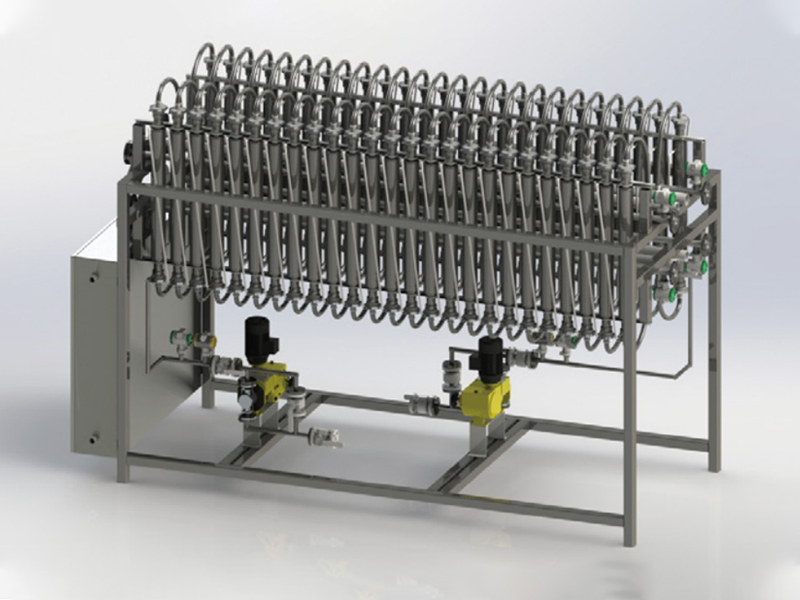
Choosing the right photochemical reaction vessel is one of the most important decisions in any light-driven synthesis workflow. Whether you are working in organic synthesis, catalyst screening, process development, environmental chemistry, or photoredox research, the vessel you select directly affects reaction efficiency, temperature control, safety, light penetration, scalability, and reproducibility. A well-designed photochemical reactor vessel helps ensure that photons are delivered consistently to the reaction mixture, while also supporting stable mixing, chemical resistance, and controlled experimental conditions.
In photochemistry, the reaction vessel is not just a container. It is part of the light delivery system, the thermal management system, and the chemical compatibility system. The wrong choice can reduce conversion, create hotspots, increase evaporation, or distort results. The right choice can improve yield, improve selectivity, and make scale-up more predictable. This guide provides a comprehensive, SEO-friendly overview of how to select a photochemical reaction vessel, including common vessel types, key specifications, material selection factors, advantages, and technical considerations for laboratory and industrial use.
A photochemical reaction vessel is a container specifically designed to hold reactants during a light-induced chemical reaction. It is used in combination with a light source such as LEDs, UV lamps, visible light modules, fiber-coupled systems, or solar simulators. The vessel may be a flask, tube, cuvette, jacketed reactor, pressure-rated container, flow cell, or custom chamber depending on the application.
The primary purpose of a photochemical vessel is to allow efficient interaction between light and the reaction medium. Because photochemical reactions depend on photon absorption, the vessel must transmit the desired wavelength range while maintaining proper temperature control and safe handling of reactive mixtures. In many cases, the vessel must also allow stirring, degassing, sampling, sealing, and pressure management.
Photochemical reactions are highly sensitive to physical setup. Unlike dark reactions, where only heat, mixing, and chemical stoichiometry matter, photochemical processes depend on how light enters and travels through the reaction medium. A small change in vessel geometry, wall thickness, or optical clarity can produce significant differences in reaction rate and product distribution.
Proper photochemical reaction vessel selection can help achieve:
For laboratories seeking consistent results, the vessel should always be matched to the wavelength, solvent, temperature range, reaction volume, and operational mode of the process.
There is no single “best” photochemical vessel for every application. Instead, the optimal choice depends on a set of technical requirements. Below are the most important selection criteria.
The first question is: what wavelength of light will be used? Different vessel materials transmit light differently across the UV, visible, and near-infrared ranges. For example, some materials are suitable for visible light photochemistry but absorb strongly in the UV region. If the vessel blocks the active wavelength, reaction efficiency drops dramatically.
Common wavelength ranges to evaluate include:
Select a vessel with high transmittance in the intended operating range. Always confirm spectral data for the full wall thickness, not just the base material.
The vessel material must allow adequate light transmission and minimize scattering or absorption. Glass is common for many visible-light reactions, while quartz or fused silica may be needed for UV-sensitive work. Certain polymers can also be useful, especially in disposable or flow applications, but they may have limited chemical or optical performance.
Important material attributes include:
A photochemical reaction vessel must be chemically compatible with the solvent, reagents, catalysts, oxidants, reductants, and any gaseous atmosphere used in the reaction. Chemical attack can cause clouding, cracking, contamination, or vessel failure.
Evaluate compatibility with:
When working with aggressive media, choose materials with proven resistance and avoid using vessels with coatings or seals that may degrade under irradiation.
Photochemical reactions often generate heat from both the lamp and the reaction itself. A vessel should support stable temperature control to prevent side reactions, evaporation, pressure buildup, and catalyst decomposition. This is especially important in long irradiation runs or when using high-intensity LEDs and UV sources.
Thermal-related vessel features may include:
The required volume strongly influences vessel geometry. Small-scale screening often uses cuvettes, small tubes, or microreactors, while gram-scale synthesis may use round-bottom flasks, jacketed vessels, or flow cells. Volume should be matched not only to the amount of material, but also to the optical path length and stirring efficiency.
In photochemistry, smaller volumes often improve irradiation efficiency because light penetrates more uniformly through a shallower liquid layer. However, larger volumes may be needed for preparative work, making vessel design and mixing even more important.
Geometry has a major effect on how light moves through the reaction mixture. A narrow tube, a flat-bottom vessel, and a round flask each distribute light differently. The optical path length determines how much light is absorbed before reaching deeper layers of liquid.
Useful geometry considerations include:
For many photochemical applications, a shorter path length improves irradiation uniformity and reduces self-shielding. However, the design must still allow adequate volume, stirring, and headspace.
Efficient stirring helps ensure uniform concentration, temperature, and photon exposure throughout the reaction mixture. The vessel must be compatible with magnetic stirring, overhead stirring, gas sparging, or circulation if required.
Good stirring performance becomes increasingly important when:
Many photochemical reactions require an inert atmosphere, oxygen control, or pressure containment. The vessel should be able to support septa, screw caps, ground-glass joints, crimp seals, or pressure-rated closures depending on the experiment. Poor sealing may allow oxygen ingress, solvent evaporation, or volatile loss.
Consider whether the process needs:
Photochemical experiments may involve UV exposure, reactive intermediates, flammable solvents, and pressurized gases. The vessel should help reduce operator risk and support safe operation. If the reaction is exothermic or gas-generating, safety margins become even more important.
Key safety features may include:
Below is a practical overview of the most common vessel formats used in photochemistry and related light-driven synthesis workflows.
| Vessel Type | Typical Use | Main Advantages | Typical Limitations |
|---|---|---|---|
| Quartz vessel | UV and visible photochemistry | High UV transmission, excellent clarity, strong optical performance | Higher cost, more fragile than some alternatives |
| Borosilicate glass flask | Visible-light reactions, general lab use | Widely available, chemically resistant, good thermal stability | Limited UV transmission compared with quartz |
| Fused silica vessel | High-performance UV applications | Excellent transmittance, low impurity content, stable under irradiation | Costly, may require careful handling |
| Tube reactor | Small-volume batch or flow photochemistry | High surface-area-to-volume ratio, efficient irradiation | May have limited mixing depending on design |
| Cuvette-style vessel | Analytical or screening-scale experiments | Defined optical path length, convenient for screening | Small volume, limited scale-up capability |
| Jacketed photoreactor vessel | Temperature-controlled preparative reactions | Excellent thermal control, scalable, compatible with circulation | More complex setup, higher initial cost |
| Flow cell | Continuous photochemistry | Efficient light penetration, scalable, reproducible residence time | Requires pump system and flow control |
| Pressure-rated vessel | Gas-involved or pressurized photochemical reactions | Improved safety, supports elevated pressure operation | Heavier, more expensive, may require special fittings |
Material selection is one of the most important parts of photochemical reactor vessel design. Different materials offer different balances of optical transmission, chemical resistance, mechanical strength, and temperature tolerance.
Quartz is widely used in photochemistry because it transmits UV and visible light extremely well. It is ideal for reactions that require deep UV exposure or broad-spectrum irradiation. Quartz is often preferred for high-performance research applications where optical transmission is a top priority.
Borosilicate glass is the most common laboratory glass for general chemical work. It offers excellent chemical resistance and thermal stability and is suitable for many visible-light photochemical reactions. It is economical and versatile, but it is not optimal for lower UV wavelengths.
Fused silica provides superior UV transmission and low optical distortion. It is often selected for highly sensitive photochemical systems, advanced spectroscopy-linked setups, and applications where maximum light throughput is essential. It is usually more expensive than standard glass.
Some photochemical vessels use polymeric materials such as fluoropolymers, acrylics, or engineered plastics. These materials may be useful in disposable systems, flow devices, or special-purpose reactors. However, polymer performance must be checked carefully because some plastics absorb UV light or degrade under prolonged irradiation.
| Material | Optical Performance | Chemical Resistance | Temperature Resistance | Best For |
|---|---|---|---|---|
| Quartz | Excellent for UV and visible light | High | High | General photochemistry, UV-sensitive reactions |
| Borosilicate glass | Good for visible light | High | High | Routine lab photochemistry, cost-effective setups |
| Fused silica | Excellent, especially in UV | High | High | High-precision photochemical systems |
| Fluoropolymer | Moderate to good depending on grade | Very high | Moderate to high | Harsh chemical environments, flow systems |
| Acrylic or similar plastic | Good in some visible-light systems | Moderate | Moderate | Low-cost, non-UV applications |
When evaluating a photochemical reaction vessel, it is helpful to compare technical specifications in a structured way. The following table summarizes the most important parameters.
| Specification | Why It Matters | Typical Considerations |
|---|---|---|
| Optical transmittance | Affects light delivery and reaction efficiency | Match the intended irradiation wavelength |
| Wall thickness | Influences transmission, thermal transfer, and durability | Thinner walls often improve light penetration but may reduce strength |
| Volume capacity | Determines batch size and liquid depth | Choose based on reaction scale and mixing needs |
| Shape and geometry | Controls illumination uniformity and flow behavior | Round, flat, tubular, or jacketed designs each serve different purposes |
| Seal type | Supports atmosphere control and solvent retention | Septum, screw cap, ground joint, or pressure closure |
| Temperature range | Ensures stable operation under irradiation | Check both minimum and maximum operating temperatures |
| Pressure rating | Important for gas reactions and safe containment | Use only vessels rated for the expected operating pressure |
| Compatibility with stirring | Supports uniform reaction conditions | Magnetic, overhead, or flow-based mixing |
Selecting the correct vessel can significantly improve the overall performance of a photochemical process. Some of the main advantages include:
A practical selection workflow can simplify the decision process. Start by identifying the reaction requirements, then match them to vessel features.
Photochemical reaction vessels are used across many fields. The best choice depends on the type of experiment and the operational conditions.
| Application | Preferred Vessel Features | Selection Priority |
|---|---|---|
| Organic synthesis | Good chemical resistance, visible or UV transparency, stirring compatibility | Balanced performance and reproducibility |
| Photoredox catalysis | High optical transmission, temperature stability, small-to-medium volume | Light efficiency and consistency |
| UV-driven reactions | Quartz or fused silica, strong UV transmittance | Optical clarity in the UV range |
| Flow photochemistry | Uniform channel geometry, low dead volume, pump compatibility | Residence time control and throughput |
| Preparative synthesis | Scalable volume, jacketed cooling, sealed operation | Thermal management and scale-up |
| Screening and optimization | Small vessels, defined path length, easy sampling | Fast iteration and comparison |
Even experienced users can encounter problems if the vessel is not matched to the process. Common mistakes include:
If this content is used on a blog, directory page, or industry page, it naturally supports search visibility for terms related to photochemistry and reaction equipment. Relevant keyword phrases include photochemical reaction vessel, photochemical reactor vessel, how to select a photochemical reaction vessel, photochemical vessel material, UV photochemical reactor, visible light photochemistry vessel, jacketed photoreactor, quartz reaction vessel, fused silica photochemical vessel, and batch photochemical reactor.
For SEO purposes, it is useful to place related terminology naturally throughout the page, including terms such as optical transmission, wavelength compatibility, reaction geometry, temperature control, chemical resistance, and scale-up. However, keyword usage should remain readable and relevant rather than forced.
| Checklist Item | Yes/No |
|---|---|
| Does the vessel transmit the target wavelength? | |
| Is the material compatible with all reagents and solvents? | |
| Is the reaction volume appropriate for light penetration? | |
| Does the vessel support temperature control? | |
| Is stirring or mixing efficient in the selected geometry? | |
| Can the vessel be sealed or purged as required? | |
| Is the vessel rated for the expected pressure and operating conditions? | |
| Does the design support safe and convenient handling? |
Selecting a photochemical reaction vessel is a technical decision that affects almost every part of a light-driven reaction, from optical efficiency to safety and scale-up potential. The best vessel is the one that matches the irradiation wavelength, reaction volume, chemical environment, and thermal demands of your process. Quartz, borosilicate glass, fused silica, polymeric options, jacketed reactors, tube reactors, and flow cells each have specific strengths, making them suitable for different photochemical applications.
By focusing on wavelength compatibility, material transparency, chemical resistance, geometry, temperature control, sealing, and stirring performance, you can choose a vessel that supports better conversions, more reliable data, and safer operation. For research pages, product-category pages, and educational blog content, this topic offers strong SEO potential because it addresses a high-intent technical search query with practical, evergreen information.
In short, the right photochemical vessel is not only a piece of equipment. It is a key performance factor in modern photochemistry, photoredox catalysis, and light-induced synthesis.
जोड़ना:बिल्डिंग 7, जेड एसर जेड हाय औद्योगिक पार्क, लियान तांग एवेन्यू, शांघू शहर, सी पंक्ति संख्या, जियांग्सू
दूरभाष:0512-65560736 / 0512-65371556
गतिमान:+86 13584913897 / +86 13771738377 (बिक्री)
ईमेल:jkzdhsm@yeah.net
यह वेबसाइट यह सुनिश्चित करने के लिए कुकीज़ का उपयोग करती है कि आपको हमारी वेबसाइट पर सर्वोत्तम अनुभव मिले।
 English
 Español
 Pусский
 Deutsch
 日本語
 한국어
 Indonesia
 Melayu
 Tiếng Việt



 Whatsapp
 टेलीफ़ोन
टिप्पणी
(0)